Greek Letters Fonts Embroidery Design Review
As I prepare my inventory for the upcoming weekend craft fair, my primary focus is always on versatility and production efficiency. When evaluating a new machine embroidery design for commercial use, I look beyond the digital preview to understand how it will perform on physical goods under booth lighting. The Greek Letters Fonts Embroidery Design has caught my attention as a potential staple for my School category and personalized gift lines. This review breaks down my professional assessment of this font set, focusing specifically on its viability for handmade market products, batch production, and customer appeal.
First Impressions: Academic Elegance Meets Modern Craft
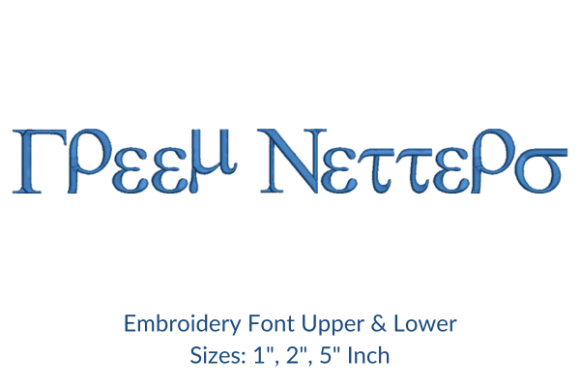
My initial reaction to the Greek Letters Fonts Embroidery Design is that it strikes a difficult balance between traditional academic formality and accessible handmade warmth. It does not feel stiff or overly digitized; rather, it possesses a classic serif structure that reads as premium and intentional. For an Etsy seller or boutique maker, this aesthetic is crucial. It avoids the cheap appearance of generic system fonts while remaining legible at various sizes. The style leans toward "collegiate vintage," making it immediately recognizable to customers looking for sorority merchandise, university alumni gifts, or classical education materials. However, its clean lines also allow it to function as a sophisticated monogram option for non-Greek items, expanding its utility beyond a single niche.
Performance Across Craft Fair Inventory
A successful craft fair product must capture attention from three feet away while holding up to close inspection. Here is how I evaluate this embroidery file across my core product lineup:
- Tote Bags and Market Shoppers: This is where the Greek Letters Fonts Embroidery Design shines brightest. Canvas tote bags provide a stable, flat surface that accommodates the font’s structural integrity. A large-scale name or quote stitched in cream thread on a natural canvas bag creates a high-contrast, photogenic item that photographs beautifully for printable mockups and online listings.
- Apron Embroidery: For culinary students or cooking clubs, this font adds instant professionalism to aprons. The lettering is bold enough to be read across a kitchen but refined enough to feel like a high-end handmade product. I recommend placing the text on the upper chest bib area for maximum visibility.
- Tea Towels and Linens: While effective, tea towels require careful stabilizer selection. The font performs well on flour sack towels, but on textured terry cloth, the finer serifs may get lost. I would reserve this design for smoother woven fabrics when doing tea towel embroidery to ensure crisp edges.
- Caps and Headwear: Curved surfaces are the ultimate test for any alphabet. This font appears to have adequate spacing for cap hoops, but I advise testing on unstructured caps first. The vertical height of Greek characters can sometimes cause distortion on curved brims if the hoop size is too tight.
- Embroidered Patches: Creating standalone patches with this font is a smart strategy for low-cost add-ons at a booth. Because the letters are distinct, they work well as individual initials or short abbreviations on felt or twill backing.
Production Practicality and Batch Efficiency
For creative entrepreneurs, time is money. A design might look beautiful, but if it requires constant re-hooping or excessive trimming, it kills profit margins. The Greek Letters Fonts Embroidery Design appears optimized for repeatable batch production. The consistency in baseline alignment suggests that I can gang multiple names in a single hoop run without manual adjustment between each stitch-out. This is vital for fulfilling custom orders quickly during the busy holiday season.
From a sales perspective, the font is instantly understandable. Customers do not need to squint to decipher the characters, which reduces hesitation at the point of sale. Whether used as a small accent on a pouch or a large focal design on a pillow cover, the visual weight remains balanced. This scalability makes it an excellent asset for commercial embroidery businesses that need one reliable font to serve multiple price points and product categories.
Critical Use Notes for Professional Results
Despite its high quality, no digital embroidery file is immune to physics. As an experienced designer, I must highlight specific technical considerations to prevent production failures:
- Stitch Density Management: Greek letters often feature varying stroke widths. On dark fabrics, ensure your underlay is sufficient to prevent fabric grain from showing through the satin stitches. Conversely, on lightweight fabrics, check that the density isn't so high that it causes puckering or needle holes.
- Small Lettering Limitations: While marketed for personalization, avoid scaling this font below 0.5 inches in height. The intricate serifs and internal counters will close up, resulting in thread nests. For tiny tags or labels, opt for a simpler sans-serif block font instead.
- Fabric Texture Interaction: If you are stitching on nubby linen or rustic burlap for a farmhouse-style product, use a water-soluble topping. This ensures the Greek Letters Fonts Embroidery Design sits on top of the texture rather than sinking into it, preserving legibility and perceived value.
- Thread Contrast: Low-contrast combinations (e.g., navy thread on black fabric) will obscure the elegant details of this typeface. For craft fair displays, prioritize high-contrast pairings that pop visually from a distance.
Designer’s Checklist Before Selling
Before listing any finished product featuring this Embroidery font or taking it to a market, run through this professional verification process:
- Test Stitch-Out: Never trust the screen view. Always sew a test on the exact fabric and stabilizer combination you intend to sell. Inspect the registration and pull compensation.
- Verify Licensing: Confirm the commercial license terms included with the Greek Letters Fonts Embroidery Design. Ensure you are permitted to sell finished physical products and check if there are limits on production volume.
- Create Physical Mockups: Do not rely solely on software simulations. Photograph a real sample in natural light. Real-world photos convert better on Etsy because they prove the design assets actually work on the stated material.
- Check Spacing and Kerning: Automated kerning in embroidery software isn't perfect. Manually adjust spacing between specific Greek character pairs to ensure even visual rhythm before finalizing your production files.
- Assess Brand Consistency: Does this font align with your shop’s existing aesthetic? If you sell primarily modern minimalist goods, ensure this traditional font doesn't clash with your brand identity unless intended as a specific capsule collection.
Final Verdict for Makers and Sellers
The Greek Letters Fonts Embroidery Design represents a strong investment for makers targeting the academic, organizational, and personalized gift markets. Its blend of traditional structure and clean execution makes it a reliable workhorse for small shop product lines. By respecting the technical limitations regarding size and fabric choice, and by leveraging its strengths on stable substrates like canvas and twill, this font can significantly elevate the perceived value of your handmade inventory. For the upcoming craft fair season, I plan to feature this design prominently on tote bags and aprons, confident that its classic appeal will translate directly to sales and customer satisfaction.